↓
 

Historic South Dade

The past is never dead. It’s not even past. - William Faulkner

  • Home
  • Articles
  • Books
    • Detroit, Florida, in 1911
    • Lest We Forget
    • Wilderness on the Edge
  • Contact
  • Historic Homestead Newspapers
  • Index to Articles
    • Cutler
    • Detroit – Florida City
    • Goulds
    • Homestead
    • Longview
    • Modello
    • Naranja and Princeton
    • Redland
    • Settlement of South Dade
  • Resources
    • Automobile Owners in 1923
    • Census Spreadsheets
      • Agricultural Labor Resources
    • Directories
      • Business Directories
      • Telephone Directories
    • Dr. John B. Tower’s Birth Records
    • Finding Aid for Isabelle B. Krome Papers
    • Maps
    • Naranja Cemetery
      • Cemetery Index
      • Obituary Index
      • Section & Plot Maps
    • Research Aids for Homestead Claims
    • School Yearbooks
    • South Dade High School Integration
    • State Archive Resources
    • Town and City of Homestead Council Minutes, 1913-1965
Home - Page 18 << 1 2 … 16 17 18 19 20 >>

Post navigation

← Older posts
Newer posts →

The Brookers of Homestead – Part I

Historic South Dade Posted on June 22, 2015 by JeffMarch 18, 2023

By Jeff Blakley

Anyone who grew up in the Homestead area earlier than 1970 knew Henry Brooker, Jr. and the Brooker Lumber Company. His father, Henry Brooker, Sr., founded the company as the Homestead Lumber Co. In 1928, he turned the company over to his son, Henry, Jr.1 In the 1970s, Brooker’s was the only game in town when it came to building supplies. It also carried a small selection of household goods. Brooker’s was a hold-over from the days when general merchandise stores existed all across the country in the 19th and into the early part of the 20th century. Henry Brooker, Sr. had two brothers: Edward Franklin, and Thomas Potter. In this four-part article, I am going to write about the Brooker brothers’ parents in part I and Henry, Edward and Tom in parts II, III, and IV.

The Brooker brothers’ father was John L. Brooker, 24, who was married to Margaret, 18, with sons Henry, 4 and Eddie, 2, in the 1880 census of Palmetto, Manatee, Florida.2 Their mother was Margaret E. Mathis, who was born in Manatee County, Florida on April 15, 1859, the daughter of Mary Ann Williams and James Washington Mathis.

Margaret’s mother and father divorced shortly after she was born and her mother then married Edward Whidden on July 19, 1860 in Hillsborough County. Mary Ann, 25, her daughters Augusta, 14 and Margaret, 12, were enumerated in the 1870 census of Manatee County, Florida with her new husband, Edward, 26.3 Edward was a stock raiser and Mary Ann was keeping house. In the 1885 Florida Census, Edward Whidden, 40, and his wife, Mary, 38, were enumerated in Kissimmee, Brevard County, but no children were shown. Edward and Mary Ann Whidden next appeared, along with two of Mary’s grandchildren, Thomas Brooker and Cora Brannan, in the 1900 census of Jupiter.4 Cora was the daughter of Mary’s daughter Emily Augusta and her husband Eli Brannan. Edward’s occupation was “cowboy,” which is consistent with his occupation as a “stock raiser” in 1870 in Manatee County. In addition, Margie Miller, 46, who was the wife of Edward Miller but who was enumerated as a “step-daughter,” and Annie Randolph, an adopted daughter born in 1883, were living in the Whidden household. The identity of Annie Randolph is not known at this time.

John Brooker married Margaret E. Mathis, probably in 1875. Family records show that John and Margaret had three sons and a daughter: Henry, born on April 12, 18765; Edward Franklin, born on 19 April 1879,6 Leila Blanche, born on September 19, 1884 and Thomas Potter, born on 29 December 1885.7 Margaret and John L. Brooker parted in the mid-to late 1880s – they either divorced or he met an untimely end between 1886 and 1889, when Margaret married Edward C. Miller, the son of James P. Miller.

James P. Miller married Mary A. Jamison on July 16, 1853 in Talbot County, Georgia.8 Their son Edward C., 25, was enumerated in Orange County, Florida in 1885. Edward’s father was a hotel keeper.9 After marrying Edward Miller in 1889, Margaret had two more children: Cecil Earl, born on 24 December 189410 and James Howard, born on 2 Nov 1904.11 Cecil and James were born in Jupiter. Cecil died in Jacksonville so the fact that there is an Edward Miller buried in the St. Augustine National Cemetery in Jacksonville likely means that the man was Cecil’s father.12

Edward C. Miller claimed a homestead in sections 25 and 36 of township 40 south, range 42 east in what was then Dade County but is now Palm Beach County, receiving his patent on May 17, 1905.13 His daughter-in-law, Lucille D. Cronk, also claimed a 160 acre homestead in section 36.14 This property was about two miles north of the town of Jupiter. In August of 1904, Edward Miller gave a $385 mortgage to Ida A. Ziegler for his property and his step-son, Thomas Brooker, gave a mortgage of $750 to the same woman for land in section 8, township 40 south, range 39 east.15

There is little doubt that Margaret’s sons by her first marriage lived with her new husband, Edward Miller, in Jupiter but no record exists of what they were doing. A clue might be the mention in The Gazetteer of October 24, 1894 that E. C. Miller, of Jupiter, established a butcher shop and oyster restaurant in one of the Livingston buildings.16 Their step-father’s occupation in 1900 was “farmer,”17 but occupations in the census are notoriously unreliable, particularly when the occupation given was “farmer.” No doubt the sons contributed to the household economy in the late 1880s and through the middle 1890s but by 1900 Henry and Edward were probably out on their own, as they were 23 and 21, respectively. Their brother, Thomas, was living with his grandparents, so he may or may not have been contributing to the Miller household.

In May of 1904, Henry Brooker was an inspector and E. C. Miller was the clerk of Precinct 2, Jupiter.18 E. C. Miller continued to appear as the inspector of Precinct 2 through June of 1906, the end of his term. Not long after that, Ed and Margaret moved to Miami because in 1907, he appeared on the delinquent tax list as the owner of lot 8, block 43, city of Miami, north.19 This property was on 4th St., just east of Avenue D and was close to the hotel he and and Margaret operated in 1910 on 6th Street near Avenue B.20 They were in Miami until at least late 1912, when T. P. Brooker and his wife “motored up from Homestead” to spend the night with his mother and step-father.21

Possibly desiring to be closer to Margaret’s first three children, who had filed claims for homesteads west of Detroit, Florida, Ed and Margaret moved to Detroit also. Some time between 1913 and 1915, Ed purchased 20 acres of land from the Model Land Co. – ten acres on the south side of Ohio Street (now Arthur Vining Davis Parkway) and ten acres on the north side. There, they built a house on the east side of the Dixie Highway, denoted as “Avenue B” on the plat below, which was the road from Homestead to Detroit at that time.

Miller s Subdivision

Edward C. Miller’s Subdivision

This plat was for the western half of the land owned by Miller. The eastern part, adjoining what would become Krome Avenue, was part of the marl prairie and suitable for pasture for the thoroughbred Jersey bull that Miller offered for stud service.22 No doubt, Miller and his family lived in a house built on the higher ground.23 His property came to be known as “Miller’s Hammock” and was incorporated in 1945 into the newly established Bryan H. Edwards Municipal Park.

Margaret Miller died on June 16, 1917. “Mrs E. C. Miller – Mrs. E. C. Miller of Homestead, at the age of 58, died at 2:10 yesterday afternoon after an illness of several weeks. Aside from her many friends in Miami and Homestead as well as other places, she leaves to mourn her loss her husband, E.C. Miller of Homestead; her mother, Mrs. Mary A. Whitten of Arcadia, Fla., five sons, Henry Brooker, Edward F. Brooker, Thomas P. Brooker, and Cecil E. Miller and James H. Miller of Homestead, and one daughter, Mrs. Blanche Rushing of New York City. The funeral will be held at the new Combs Chapel, 323 11th St., at 3:00 p.m. today, and the interment will be in Woodlawn Park Cemetery.”24

Following his wife’s death, Miller moved to Homestead, where he was enumerated in the 1920 census living between Benjamin King,25 son of William A. King and George M. Pinder. He had rented his house in Florida City to Mr. Niles, who had come from Perrine. Miller’s house had formerly been rented to H. C. Bagley.26

In 1940, he was living with his son, James H. on Lake Shore Drive in Canal Point in Palm Beach County.27 His son was the superintendent of a planing mill. A planing mill is where rough-sawn lumber is sent for finishing before it is sold.

Henry Flagler’s railroad had reached Miami in 1896 and Homestead in August of 1904. The economic impact of the railroad in the Jupiter area was no less than it was in Miami. All of the Brooker brothers worked for the Florida East Coast railroad. Ed was night operator in Jupiter but in 1906, he was sent to Homestead to become the station master.28 29 Henry followed his brother and worked out of Knight’s Key on the Extension’s telegraph lines. Tom was a fireman in Jupiter and came last, in 1910.

Screen Shot 2019 09 15 at 7 16 55 PM

Location of the Brooker homestead claims west of Detroit

All of the Brooker brothers homesteaded west of Detroit. Henry Brooker was first – he filed a claim for an L-shaped parcel on March 9, 1907. Edward Brooker was next – he filed a claim for another L-shaped parcel on February 26, 1910. Tom Brooker was the last of the Brooker brothers to file for a homestead claim. He filed on December 10, 1910.

Henry Brooker married Grace Skill, the daughter of Charles W. Skill (1839-1914) and a sister of Frank L. Skill, who owned and operated the W. D. Horne Hardware Co. Frank’s wife, Pearl Turnage, was the sister of Carl Turnage, the photographer who owned Turnage Studio in Homestead.

Edward F. Brooker married Annie Almeda Johnson, whose grandfather, James Arango Armour, was the head keeper of the Jupiter lighthouse from 1868 to 1908.

Tom Brooker married Jewel Harris, who was the sister of Bessie Harris, the wife of Carl Deden. Her brother, Thomas J. Harris, was a future mayor of Homestead.
_____________________________________________________________________
Posted in Business, Homestead, Pioneers, Real Estate Speculation | Tagged Brooker, Miller | 5 Replies

Orville Whitford Calkins

Historic South Dade Posted on May 31, 2015 by JeffAugust 17, 2023

by Jeff Blakley

Orville Calkins and his wife’s second cousin, Dr. John B. Tower, filed claims for their land in the Longview area, west of Detroit, on February 19th and 26th, 1910, respectively. On October 20, 1913, Orville was granted a patent on his homestead of 160 acres. It was located on the south side of Palm Avenue (S.W. 344 St. – also called the Camp Jack Road) and ran from S.W. 202 Ave. west to S.W. 207 Ave., south to S.W. 364 St. and then east to approximately S.W. 200th Ave.

His full name was Orville Whitford Calkins and he had been born on 4 December 1877, according to his WWI draft registration card, dated September 12, 1918. At that time he was living 2 1/2 miles west of Florida City and he was a farmer. He received mail at R.F.D. #1 in Homestead.

I consulted the federal census records for Orville Calkins and discovered that he had been born in Iowa and that his father, Charles H. Calkins, was a physician. By 1885, the family was living in Topeka, Kansas, which, coincidentally, was also the home of a number of early settlers in the Longview neighborhood, where Orville Calkins homesteaded. Orville and his parents still lived in Kansas in 1900, when Orville was 23.

Orville was well-educated – he had attended Washburn College. According to Jean Taylor, in her book, The Villages of South Dade, he had come from a family of musicians and he studied music in college, joining an orchestra. His father’s occupation in the census returns was a physician but perhaps he indulged in music when he wasn’t seeing patients. Orville was a piano tuner and repairman. He appears in the Miami City Directory from 1923 – 1931 as, variously, a piano tuner, repairer, and musician. By 1937, though, probably because of the Depression, he sought the security of a government job, as he then appears as a grove inspector for the State Plant Board.

In September of 1917, when Orville was 41, he and his wife Addie welcomed a girl, Joy Ann, into their lives. The census record that says that Joy Ann was born in Kansas confirms Jean Taylor’s account, which says that because Addie was old at the time (35), Addie and her family went back to Kansas to give birth. Perhaps Florence Hunt advised them to do so, due to possible complications. The birth was uneventful and Joy Ann appears in the federal census schedules twice, in 1920 and 1930. In the 1920 census, Addie and the two children were in Miami and in the 1930 census, the whole family lived at 822 Avenue Milan, in Coral Gables. In 1930, Orville appeared on the passenger manifest of the ship, Governor Cobb, which docked in Key West after a trip from Havana, Cuba on July 6. Havana was a very popular vacation destination in that era. People would take Flagler’s train to Key West and then embark on a ship for the short trip to Havana. In the 1935 Florida census, the Calkins family lived at 2277 S.W. 4th St. in Miami. In the 1940 census, Orville and Addie were back on their homestead west of Florida City, with no children living with them.

Jean Taylor, who interviewed Mary Calkins Heinlein (she was born on April 3, 1903), wrote that Mary’s parents, Orville and Addie Tower Calkins, were married in 1900. Addie was born on August 6, 1882. Her first daughter, Mary, married Forrest Burke in 1920 but later divorced him and married Herman Heinlein. The Redland Fruit and Spice Park in Redland is named for Mary Calkins Heinlein. Her husband, Herman Heinlein, was not related to the Hainlin family for which Hainlin Mill Drive (S.W. 216 St.) is named.

Joy Ann Calkins, the Calkins’ second daughter, married Robert Gerrit Ward in Fort Lauderdale on August 25, 1939. In 1940, she was employed by Southern Bell Telephone and Telegraph Company in Homestead. Her husband was a horticulturalist on a private farm. According to Taylor, she had children but died of cancer in May of 1959. She was only 42 years old.

In an article that appeared on October 11, 1912 in the Miami Herald, Orville is mentioned as being the director of the District Number Eight band in Detroit. The piece said, “[w]e are sure that under the direction of Mr. Orvie (sic) Calkins they will hold first place among musicians of the country.”

Without studying the newspaper advertisements in Topeka, Kansas, it is impossible to say with certainty that the Miami Land & Development Company brought Orville and his wife here. But it certainly seems plausible. At the age of 32, in 1910, he filed a homestead claim and was on his property in 1918. Some time after that, he moved to Miami, where he could employ his talents as a musician more profitably. He also lived for a time in Vero Beach, in Indian River County. Orville never sold his property in South Dade, though, because his wife continued to live there until a few years before her death in 1966 at the age of 84.

Posted in Florida City, Homestead, Pioneers | Tagged Calkins, Camp Jack, Hainlin, Heinlein, Longview, Reland Fruit & Spice Park, Tower | Leave a reply

Bryan H. Edwards

Historic South Dade Posted on May 25, 2015 by JeffJanuary 16, 2022

By Jeff Blakley

Bryan Hastie Edwards,7 the third mayor of the Town of Florida City, served from 1922 until his death in August of 1934. In 1945, a municipal park was established on land the Town had acquired through tax certificates and named for him – the Bryan H. Edwards Municipal Park. It was located at the northeast corner of Arthur Vining Davis Parkway and the original Dixie Highway, then known as Flagler Avenue and now simply known as N.W. 3rd Avenue.

Bryan H Edwards Municipal Park

Bryan H. Edwards Municipal Park

B H Edwards Park

Edwards Park before 1955. Photo by Jack Levy. Courtesy of the Historic Homestead Town Hall Museum

Sometime in the late 1970s, the park was converted to a campground for travel trailers and it continues to be used for that purpose to this day. The Capri Restaurant now occupies the building just right of center at the top of the photograph.

Florida City Camper Site

Edwards Park in 1981. Photo by Ed Oberlies. Courtesy of the Historic Homestead Town Hall Museum

So who was Bryan H. Edwards?

Bryan H. Edwards was born on December 24, 187710 in Macon, Georgia, the son of James Wilson Edwards (1846-1903) and Penelope Bryan. In the 1900 census of Macon, Bibb County, Georgia, Bryan was enumerated with two brothers, James W., Jr. and Richard S. and a sister, Susie W., in the household of his parents.30 His father was the son of James Corson Edwards and Elizabeth Griffing Hunt. James C. Edwards was a cotton-buyer and land agent in Macon. Bryan’s mother, Penelope, was the daughter of William and Penelope Bryan, who were enumerated in the 1860 census of Twiggs County, Georgia. In that census, William Bryan’s real estate holdings were worth $71,040 and his personal estate was valued at $60,770.31 In 1870, after African-American slaves were freed, he was enumerated in Dooly County, Georgia with no assets, either of real estate or personal.32 Bryan’s father worked for the book publishing firm of J. W. Burke & Co. in Macon for 30 years. John W. Burke was a prominent preacher and a wealthy publisher in Macon.

Bryan’s uncle, Harry Stillwell Edwards, born on April 23, 1855 in Macon, Georgia, graduated from the Mercer University School of Law in 1876 and was a journalist and editor of the Macon Telegraph newspaper in Macon.33 34

In 1900, Bryan married Jacqueline Slappey,35 the daughter of Jackson W. Slappey and Fanny Slade Prescott. Jackson’s parents were George H. Slappey and Nancy Ball. In the 1860 census of Macon, Bibb County, Georgia, G. H. Slappey had real estate worth $63,000 and a personal estate valued at $90,000. After the war ended, those values declined to $45,000 and $6,800, reflecting the loss of George’s slaves.36 Bryan’s social connections in Macon enabled him to take a place in high society quickly. In the 1904 Macon City directory, he and his wife, Jacqueline, lived near the intersection of Napier and Holt and he was a clerk at the Acme Brewing Company, the largest brewing company in Macon and one of the largest in the South.37 Bryan and Jacqueline had two children: Constance, born on March 29, 1902 and Jacqueline, born on August 16, 1904, both in Macon.38 In 1905, the family moved into a house at 114 Coleman Avenue. The house has since been demolished for the expansion of Mercer University but it was in a neighborhood where the movers and shakers of Macon society lived.

By 1910, Bryan had moved on to be part of the management team of the Macon branch of the White Provision Company, a large meat packing company with headquarters in Atlanta.39 40 In 1912, Bryan and others applied for a charter for the Georgia Pecan Orchard Company41 and in 1913 applied for a charter for the Southern Package Manufacturing Co., which would manufacture crates, boxes and barrels.42 In 1914, he was the vice-president of the Griffin-Edwards Construction Company and also the secretary of the Southern Package Manufacturing Company, both located in Macon, Georgia. In 1914, he partnered with Walter D. Griffin of Macon to form the Griffin-Edwards Construction Co.43 The 1914 and 1915 Macon City directories show him as the vice-president of the Griffin-Edwards Construction Co. and the secretary of the Southern Package Manufacturing Co. In addition to all of these business activities, he became associated with the Troy-Honduras Co., which was an export-import business with headquarters at 1 Wall Street in New York City that did business in Honduras. The company sold building materials, machinery, automobiles, groceries and general merchandise and imported lumber, hides, coffee and other products from Central America. It had offices in Potrerillos, Amapa Camp and Jaral, Honduras. It was founded by Thomas W. Troy, who was born in Alabama and lived in Macon.

Troy Honduras Co

Bryan lived in Potrerillos from December of 1914 and left, for the last time, in September of 1918. His wife had visited him earlier in 1918 and returned to the United States via New Orleans aboard the ship S. S. Quimistan, sailing from Omoa, Honduras on July 7, 1918.44 He was the general superintendent of Troy-Honduras Co. there during that time.45

In February of 1918, he and his wife visited Florida City and purchased 10 acres of land on the prairie.46 They were pleased with the climate in South Florida as it was similar to that of Honduras. That likely was a major factor in their decision to locate in Dade County. After renting a house for a little over a year, Edwards purchased the former Hunt Hospital on the Dixie Highway at 8th St. in 1920. He and his family moved into the house after E. J. Franklin and his family, who were living there, moved to Fort Lauderdale on May 24.47 It was to be his home until his death in 1934.

P1070162 2

The former Hunt Hospital/Edwards house in 2019. Photo courtesy of Jeff Blakley

Edwards established the Florida City Lumber Co. in 192048 and the company cut its first log that September.49

Edwards was granted a license to sell real estate in 192150 and he got to work right away, placing advertisements offering his services in each issue of The Homestead Enterprise and, when The Homestead Leader was established in 1923, in that paper also.

B H Edwards
B. H. Edwards Advertisement51

His brother, James W. Edwards, Jr., mother and other relatives visited him often.52 James W. Edwards later moved to Florida City and then lived in Miami.

On March 13, 1922, Edwards defeated Edward Stiling, 93 – 20, in the race for mayor of Florida City.53 He was re-elected to his 7th consecutive term as mayor shortly before he died in 1934. As a realtor, he was associated with B. B. Tatum and the Miami Land & Development Co. and promoted their ventures. One, an oil well to be drilled southeast of Florida City on the Key Largo road, was promoted as early as 1922 but actual drilling didn’t begin until 1927, when the well had been drilled down to a depth of 987 feet.54 That well was part of a real estate promotion scheme on the part of the Tatums to sell more of their land in the East Glade.55 In 1924, he promoted a plan to grow banana plants between rows of citrus in the East Glade, mimicking a practice that he had seen in Honduras. In 1925, he extensively remodeled the house he had purchased in 1920. It had formerly been the Hunt Hospital and was a rather modest home. Edwards built a larger house, wrapping the new construction around the old shell and adding the rock wall that surrounds the house and that is still there. The construction was supervised by Andy Terburg.56 Edwards was involved in a number of civic affairs and was active in agricultural circles as well as in the Redland District Chamber of Commerce, where he was elected to a director position in 1926, along with Annie Roberts, wife of Daniel M. Roberts, the first woman to serve on the Board.57 In 1931, he was elected president of the Redland District Fair Association, which put on the annual fruit festivals and he helped form the South Dade Grower’s Association, a co-operative for farmers who weren’t happy with the services they were getting from other co-ops in the area.58

Edwards suffered from heart disease, which seems to have been genetic, as several male ancestors in his direct line died in their 50s. After 1931, newspaper mentions of Edwards dropped off significantly, perhaps because he was not able to be as active as he once was. Bryan H. Edwards died of heart disease in a hotel room in Miami while on a business trip on August 13, 1934. His funeral, conducted from his home in Florida City, was attended by hundreds. The hearse bearing his body received a motorcycle escort composed of representatives from Homestead, Miami and Coral Gables on its journey from Florida City to Miami, where he was buried in Woodlawn Cemetery

This article was completely re-written on August 28, 2019.
______________________________________________________________
Posted in Business, Florida City, Government, Parks, Pioneers, Real Estate Speculation | Tagged Brooker, Edwards, Florida City, Parks | 4 Replies

Walter Jackson Tweedell

Historic South Dade Posted on May 8, 2015 by JeffJanuary 13, 2024

By Jeff Blakley

In my article about telephone subscribers in Homestead in 1912, Walter Tweedell’s store is listed as being one of the subscribers. In the article about early workers in Homestead, it was mentioned that J. U. Free had sold his store to W. J. Tweedell. There was also a reference to W. J. Tweedell acting in his capacity as a County Commissioner in the article on the Women’s Industrial Club of Detroit. He and another Commissioner received a letter from the Trustees for the Internal Improvement Fund in early 1915 instructing them to take steps to prevent trespassing on the lands that would become part of the new Royal Palm State Park. Jean Taylor, in her book, The Villages of South Dade, mentions Walter Tweedell only briefly,59 so, because he was a County Commissioner, I thought it important to find out more about him.

Walter Jackson Tweedell, referred in the newspaper accounts in this area as W. J. Tweedell, was born on January 4, 1876 in Gordon County, Georgia.60 His parents were James A. Tweedell (1836-1907) and Nancy E. Groover (1840-1919). His grandfather, A.W.H. Tweedell, judging by the prominence of his monument and the fact that he was a minister, was probably the preacher at the Sugar Valley Methodist Church in Sugar Valley, Gordon County, Georgia.

In the 1880 census of Sugar Valley, Gordon, Georgia, James A. and Nancy E. Tweedle are enumerated, along with their children: Sion, 9, Maggie J., 7; Walter J., 5; Thomas A., 3, Ervin, 1; and James’ father, Alexander W.H., 67. Ervin G. Tweedell was born on May 25, 1879.61

The next appearance of Walter J. Tweedell is in the 1900 census of Cocoanut Grove precinct 4, in Florida. No doubt, he rode Flagler’s train to Miami and then walked further south. In that census, he and his brother Erving G. (Erving Groover) were living in the household of Charles and Melvina F. Gossman, with their children Henry A., Jesse E. and Charles W. Interestingly enough, there was another lodger living with the Gossmans of interest to those of us here in South Dade: Will Anderson, born in September 1878 in Indiana.

Walter Tweedell and his brother, Erving G., established a small store in the community of Cutler about the same time as George W. Moody. After Moody moved his business to Perrine, the Tweedell brothers “moved from their old stand” into “the stores formerly occupied by Brown & Moody.”62

Tweedell Richmond Ad

According to an article in this same source, there were two stores in Cutler: Tweedell Bros. and Brown & Moody. Brown & Moody later moved to the Naranja area – the Moody of Brown & Moody was George Walter Moody, for whom Moody Drive is named.

Being in the grocery business in Cutler must have been a short-lived venture, probably because the town of Cutler started to decline. That decline was due to Flagler’s railroad being built in 1903 on the other side of the marl prairie which separated the Cutler ridge from the pine rockland to the west. Erving Tweedell claimed the S 1/2 of the SE 1/4 of 14-56-38 and the N 1/2 of the NE 1/4 of 23-56-38 on August 10, 1904 but gave it up to his brother Walter on February 23, 1905. Walter proved up the claim on June 24, 1910. This property is on the west side of Redland Road, from S.W. 236 St. up to S.W. 228 St.

Erving, Walter’s brother, stayed in Cutler, which is probably why he surrendered his homestead claim in the Redlands to his brother. As early as March 21, 1904, he was advertising in The Miami Metropolis in a race against Samuel H. Belcher for the right to run for County Commissioner in District 5. He defeated Belcher in the Democratic primary on May 1063 64 and defeated Walter Waldin in the general election held November.65 On June 27, 1905,66 67 he married Amelia Louise Morrow in Key West. A son was born to them on September 6, 1906 but unfortunately, he died at the age of one day. Erving ran for re-election in 1906 and won a second term.68 In February of 1907, Erving and his wife moved to Miami, where he opened a dry goods store in the Hamilton Building on Avenue C near 1st St.69 At that time, he and his wife lived on 1st Street near Avenue D.70 Shortly after moving to Miami, Tweedell resigned71 and A. T. Carter, of Larkins, was appointed to replace him.72 His grocery business in Miami was short-lived, though, because by 1908, he and his wife had moved to Lakeland,73 where he opened a grocery store.74

On February 4, 1904, Walter married Maisie I. Park in Key West. That was before Flagler’s railroad had reached Key West, so Walter must have been in Key West for some other reason than to go courting. Since he and his brother owned a store, perhaps he was buying merchandise for it. At that time, Key West was a much larger city than Miami. In the 1900 census, both Maisie and her parents were shown as having been born in the Bahamas. That wasn’t unusual at all – there were (and still are) quite a number of Conchs who trace their ancestry to the Bahamas. Their son, Carl Lee Tweedell, was born on January 3, 1905.

Walter picked up his brother’s homestead relinquishment in February of 1905 and worked to prove up his claim. He was appointed the clerk of elections for precinct 14 in late December of 190975 for a bond election to be held on January 3, 1910. The vote was whether to approve a bond issue of $150,000, $75,000 of which was to be used to pay off indebtedness and the balance to be used to build roads in the “various districts of the county.”76 The polling place was at John Bauer’s store on Redland Rd., just south of Bauer Drive. The bond issue was approved, 351 – 116.77 Shortly after the approval, Bayard C. Murden of Naranja, Henry H. Harrison of Black Point and Walter J. Tweedell of Redland were appointed to stake out a road running north from the Naranja F.E.C. depot at the railroad tracks and S.W. 147 Avenue and then west on Coconut Palm Drive to the Redland School house at the corner of Coconut Palm and Redland Road. The petition for the road was signed by Otto Froreip and 11 others.78 This was the beginning of Tweedell’s work promoting roads, continuing after he was elected as a County Commissioner for District 5.

Thomas Brewer, the first County Commissioner from Homestead, defeated Charles T. Plummer, 189 – 105, in May of 1908.79 He was re-elected in 1910 but declined to run for the seat in 1912, opting to run for Dade County Sheriff. He apparently changed his mind, though, and ran for the State legislature instead.

By June of 1911, Walter had moved up in political circles, becoming a member of the Dade County Democratic executive committee.80 In the Democratic primary for the County Commission seat in District 5 in May of 1912, Tweedell defeated David C. Brown, who had homesteaded land on Tennessee Rd. and what is now 280th St.81 In April, 1912, he won the Democratic primary and in November of that year won the general election for District 5 of the County Commission, representing Homestead. He defeated Roy D. Marsh, 855 – 411,82 a surveyor whose name appears on many early plats in the Homestead area.

Tweedell proved up his homestead claim on June 24, 1910 and moved into Homestead in 1911.83 J. U. Free sold his store opposite the Homestead F.E.C. depot to him in August of 1911 and Tweedell planned to erect a “large concrete store building and put in a full stock of goods.”84 On November 26, the Miami Herald reported that Tweedell had “opened his store with a stock of general merchandise.”85 In 1913, he rented the Hogard house on Mowry Street and moved in.86 He had been a qualified voter in Homestead before he rented the Hogard house, though, because he was one of the electors who voted to establish the town of Homestead in January of 1913. He was also elected, along with J. D. Redd, to serve as an alderman on first council of the Town of Homestead.87 In 1913, he oversaw the expenditure of an estimated $22,500 in County funds for the construction of roads in his district.88 Those roads were mostly built with convict labor.89 90

On August 29, 1913, he bought the “northwest half of lot 5 in block 11, of Homestead,”91 at the corner of Homestead Avenue and 2nd St., just a short distance from his store. The sellers were Fred S. Loomis and his wife, Jessie. It is unknown what, if anything, was built on this parcel.

Homestead

Town of Homestead

In addition to having a store, living in Homestead, being a Town councilman and a County Commissioner, Tweedell farmed his land on Redland Road. In 1917, he grew tomatoes and bananas.92 Walter sold 60 acres of his homestead shortly after proving it up93 and more of it in November of 1920 to William Brodie.94

Walter was well-connected in town, as his wife and James D. Redd’s wife were cousins. It is not surprising to learn that Maisie was an early member of the Homestead Women’s Club. She was part of the group of women who served lunch to the crowds at the dedication of Royal Palm State Park in November of 1916.95 Her husband was a member of the South Dade Chamber of Commerce.96

Tweedell was a Town Councilman and a County Commissioner until he resigned immediately after his re-election in November of 192o due to his failing health. He was first reported ill in January of 1920.97 According to his obituary, Tweedell fell ill with influenza in the summer of 1920 and did not improve so on November 6, he went to Phoenix, Arizona, hoping to recover. Instead of improving, his health deteriorated further. In early May of 1921, his wife went to Phoenix and they traveled to Asheville, N. C., again in hopes of recovery. But he still didn’t improve so they came back to Homestead in mid-July.98

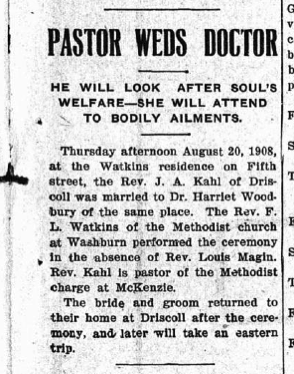
Like Rev. J. A. Kahl, very little was published regarding Tweedell’s health. He was present at all Town Council meetings during the summer of 1920 and also present at County Commission meetings. It is speculation, but it is likely that Tweedell had tuberculosis. Doctors of that time often prescribed dry climates, such as Arizona, for tubercular patients but that did not help Walter. There were a number of establishments in Asheville in 1921 that treated tubercular patients, so Asheville was a logical place to go when his stay in Phoenix didn’t help. But apparently, Walter’s case was too far advanced and nothing could be done for him.

Tweedell died on September 16, 1921 at his home in Homestead. He was 46.99 The services were conducted at the Methodist Church in Homestead and he was buried with Masonic honors in the Palms Woodlawn Cemetery in Naranja.

Tweedell had served continuously since November of 1912. Gov. Hardee appointed J. D. Redd to fill the vacancy caused by Tweedell’s resignation. Redd and Tweedell were “close friends”100 (their wives were cousins) so it is likely that Tweedell’s resignation was planned in advance, giving Redd an opportunity to be appointed. Redd received confirmation that he had been appointed to the vacant commission seat by Governor Hardee on January 15, 1921.101

After Walter died, his widow married James A. Daugherty. James Daugherty was in real estate and lived at 100 E. Mowry in 1927. Maisie is buried between her first and second husbands, with her son Carl and his second wife, Lula Eldeen Dows (neé Teel) buried at her feet. Carl was a movie projectionist who probably started out his career by working for Jim English at the Seminole Theater in Homestead. His first wife, Mae Sayers, a daughter of William David Sayers and Lydia Charlotte Vihlen, is buried in Ocala, Marion County, Florida.
_____________________________________________________________________
Article re-written on September 6, 2019

Posted in Business, Cutler, Government, Homestead, Pioneers | Tagged Commissioner, Cutler, Moody, Royal Palm Park, Tweedell | Leave a reply

Post navigation

← Older posts
Newer posts →

Subscribe to Articles

Subscribe

* indicates required

/* real people should not fill this in and expect good things – do not remove this or risk form bot signups */

Intuit Mailchimp

Quotes about History

All history is modern history.Wallace Stegner
… (next quote)

Recent Posts

  • The Sawmills of South Dade – Chapter 3
  • The Sawmills of South Dade – Chapter 2
  • The Sawmills of South Dade – Chapter 1
  • Joe Frank Lofton
  • Andrew J. Poplin
  • John S. Frederick
  • The Cedars
  • William S. Burkhart
  • The Story of Franjo Road
  • Kendal Grove
  • Frederic M. Vermilye
  • The House That McNeill Built
  • The Story of Epmore Drive
  • William C. Norwood
  • William A. King

Archives

Categories

Links

African-American History
  • African-American
  • Dr. Marvin Dunn
  • Low Country Africana
Agriculture
  • Florida State Horticultural Society
  • USDA Search Engine
Genealogy
  • Dade County Marriages 1905-1911
  • Palm Beach County Marriages 1909-1913
Government Resources
  • Early Automobile Registrations
  • Florida Railroad Commission Reports
  • Florida State Library
  • Historical County Boundaries
  • IIF Minutes
  • USGS Topo Maps of S. Dade
Homesteading Records
  • BLM Homesteading Records
  • BLM Tract Books at Family Search
  • Miami-Dade Clerk of Courts
  • Township Range Locator
Magazines
  • Tequesta Magazine
  • The Tropic Magazine
Miscellaneous
  • History of Florida, 1923
  • Marion Post Wolcott WPA Photographs
  • Upper Keys Historical Society
South Dade Resources
  • Buncombe County, NC Deeds
  • Hopkins Plat Book – 1957
  • Polk’s Directory of Homestead – 1918
  • Sanborn Fire Map of Homestead – 1920
University Resources
  • Aerial Photographs of South Dade – 1938
  • Florida Historical Quarterly
  • PALMM
  • UF Digital Library
  • UM Special Collections
©2026 - Historic South Dade - Weaver Xtreme Theme
↑