↓
 

Historic South Dade

The past is never dead. It’s not even past. - William Faulkner

  • Home
  • Articles
  • Books
    • Detroit, Florida, in 1911
    • Lest We Forget
    • Wilderness on the Edge
  • Contact
  • Historic Homestead Newspapers
  • Index to Articles
    • Cutler
    • Detroit – Florida City
    • Goulds
    • Homestead
    • Longview
    • Modello
    • Naranja and Princeton
    • Redland
    • Settlement of South Dade
  • Resources
    • Automobile Owners in 1923
    • Census Spreadsheets
      • Agricultural Labor Resources
    • Directories
      • Business Directories
      • Telephone Directories
    • Dr. John B. Tower’s Birth Records
    • Finding Aid for Isabelle B. Krome Papers
    • Maps
    • Naranja Cemetery
      • Cemetery Index
      • Obituary Index
      • Section & Plot Maps
    • Research Aids for Homestead Claims
    • School Yearbooks
    • South Dade High School Integration
    • State Archive Resources
    • Town and City of Homestead Council Minutes, 1913-1965
Home - Page 5 << 1 2 3 4 5 6 7 … 19 20 >>

Post navigation

← Older posts
Newer posts →

John Ulric Free – Part II

Historic South Dade Posted on November 5, 2020 by JeffJuly 26, 2025

by Jeff Blakley

In Part I, I provided some genealogical information about J. U. Free and his family. In this part, I will delve into Free’s business ventures.

John Ulric Free’s father died when he was just three years old. After her husband’s death, his mother, Emma Adeline, the daughter of a well-to-do farmer in Meriwether County, married Charles J. Burton, a member of another prosperous family in Meriwether County. Charles’ grandfather, Isaiah (1796-1877), owned real estate worth $10,000 in 1850 in Warnerville, not far south of Senoia.1 Charles’ father, James N. (1835-1922), was a bookkeeper in Atlanta in 1900.2

John U. Free, Jr. joined the U. S. Army in 1898 at the age of 17 and gained experience as a pharmacist while serving in the Spanish-American War in Cuba. His step-father, Charles J., was enumerated in Atlanta in 1910, where his occupation was given as a “meat dealer.”3 Free grew up in a mercantile family and took that experience with him. After he was discharged from the Army, he returned to Georgia, where he married Lulu Belle Carmichael in 1904 and began his business career in a drug store in Kestler (now Damascus), Georgia.

After spending a short time as a clerk in the drug store and then, as the owner of a grocery store in St. George, Free, like thousands of others, saw opportunity in being part of the building of Henry Flagler’s Key West Extension of the Florida East Coast Railway. He hired on and claimed his homestead, as related in part I of this article. Like hundreds of other homesteaders all over Florida, Free was also a real estate speculator and a developer. In November of 1909, before Free had obtained the patent on his property, he had his homestead surveyed by Frederick & Butler4 and divided into 18 parcels.

The first building that J. U. Free built in what would become the Town of Homestead, a grocery store, was located on Railroad Avenue on lot 5 of block 3. As more people flooded into the area, Free purchased the five acres at the southwest corner of Mowry and Krome for $420 from Ulysses A. Knight and platted it as J. U. Free’s Addition to Homestead in 1911.5 Knight was a real estate speculator who had purchased the land from the Model Land Company.

J U Free Addition

J. U. Free’s Addition to Homestead6

Free then erected this building, the first concrete building in Homestead, in late May of 1911.7 Upon completing this building, Free sold his grocery store on Railroad Avenue to Walter J. Tweedell.8

Initially, his new two-story building was the location of J. U. Free & Co. but he sold his business to C. J. Denham & Co. in early 1913. Denham, in turn, sold the business to William B. “Bunny” Caves and Henry Pridgen a few months later and then Caves sold his interest to J. D. Redd so that by September of 1913, the business was known as Redd & Pridgen, dealers in men’s furnishings.9 In October of 1914, Henry Pridgen sold his interest in the store to J. D. Redd.10

Also in 1914, J. U. Free sold the building to Benjamin E. Willis, along with his almost-new two-story residence on Center Street, a frame building which was occupied by Daniels & Fletcher, grocerymen, “and three six-room cottages in Tatum’s Addition on Krome Avenue near the big prairie.”11 12 13

J U Free Store

J. U. Free’s Store on South Krome Avenue in 1912

This store is where the Dade County Telephone Company was located, on the second floor. Free was one of the directors of the company, established on May 22, 1911.14

By 1922, Redd had purchased the adjoining wooden building to the north, torn it down, and built his department store.

J D Redd s Store

Photograph coutesy of the Florida Pioneer Museum

The lot that the Bank of Homestead was built on was donated by J. U. Free.15

The Bank of Homestead building, along with all the other buildings on the block, was demolished by the City of Homestead in 2017 to build Homestead Station.

In May of 1912,16 Free sold lots 11, 12 and 17 of his homestead, a total of 37 1/2 acres, to Stephen M. Alsobrook of Dania for $1,000. Considering that Free had paid .87 per acre for his homestead less than 5 years before, he did very well indeed, selling the three lots to Alsobrook for $37 per acre. Alsobrook then sold the property to E. M. Martin, who also acquired lots 9 and 10 of Free’s homestead and platted it in 1913 as the Woodlawn Addition to Homestead. Also in 1913, Free platted lots 1-4 of his homestead as J. U. Free’s 2nd Addition to Homestead.

J U Free s original plat

J.U. Free’s homestead 17

In the fall of 1912, J. D. Redd built a store on his lot south of the Free store for Max Lehrman, a Jewish merchant from Key West,18 who opened the People’s Shoe Shop.

Max Lehrman

The Peoples’ Shoe Shop19

Lehrman was one of the charter members of the Homestead Chamber of Commerce when it was organized in July of 1915,20 but left Homestead for Fort Lauderdale four months later, in November. There, in partnership with J. U. Free, he established the Free & Lehrman Department Store. In July of 1916, Free, his wife and their three children spent the night with Lehrman in Fort Lauderdale and then continued on with a combined vacation and business trip, traveling to the “the north and west” in his car. He met Lehrman in Baltimore in mid-August and went with him to New York City, where they purchased the “fall stock for both their stores here and at Homestead.”21

Active in the Methodist Church, Free was largely responsible for the erection of the Methodist Episcopal Church, South, which was located on the southwest corner of N.W. 1st Avenue and 2nd St. He put his employees to work building the church, which held its first services on June 27, 1913.22 In November, he attended the quarterly conference of the Methodist Church in Fulford.23

Ever the hustler and very successful in selling goods to the increasing number of people in Homestead, he sold his building on S. Krome Avenue in September of 1914 to B. E. Willis of Ft. Lauderdale and added a 20′ x 75′ addition to his already large department store on Railroad Avenue, south of the Evans Hotel.24

Hustler s Dept Store Feb 28 1917

Image capture of postcard sold on eBay

The sign on the front of the store reads J. U. Free & Co. The Hustlers. The two-story building with the porch, near the left side of the photograph, is the Hotel Evans, now the Hotel Redland.

By early 1914, Free’s business empire had grown so large that he needed help. He asked his half-brother, Joseph L. Burton, to come down and be the manager of his store. By summer, Burton was in town and was put in charge of the grand opening of the new store on August 1, 1914.25

J U Free s Arcade

Courtesy of the Florida Historical Society

This photograph is of the original wooden building, taken in 1921, and shows J. U. Free’s Arcade, composed of a number of small businesses.

In December of 1914, Free relinquished his seat on the Town Council and ran for Mayor but lost to Frank Bartmes in the election held in early January of 1915.26

By July of 1915, Free was doing so well in business that he left for a three-month trip across the United States, leaving his family in Homestead. He traveled by train and boat and visited Mexico, Alaska and Canada before returning to Homestead in September of that year. The trip cost him about $500, which is about $13,100 in 2020 dollars.27 While he was gone, Burton was managing the store and adding businesses to the building. P. Weinburg, who owned the Diamond Palace in Key West, opened a shop, which was managed by I. Meltzer.28

In January of 1916, an anonymous writer, perhaps displaying a bit of jealousy, noted that “J. U. Free has a new Ford. Having enough money to buy a car after putting up the cash for fertilizer for 20 acres planted in tomatoes would indicate that he is living somewhere near Easy street …”29

In addition to his store, Free was also selling real estate and building houses for sale and for rent. In late 1916, he placed a quarter-page advertisement in the Homestead Enterprise with listings for 21 properties30 with this statement at the bottom:

“Who is J. U. Free? He is not a real estate dealer but actual owner of the above property. The fellow who has built more houses in Homestead than any other five men, and who has sold part of them for less money on first cost than anyone else in town. I have over a hundred lots and will sell any of them cheap to parties who will put up actual improvements. Don’t by any means buy unless you look me up. Where can you find me? Hard to tell as I am a busy man, but ask Joe Burton. He can tell you where to find me. It’s money in your pocket to hunt me up.”

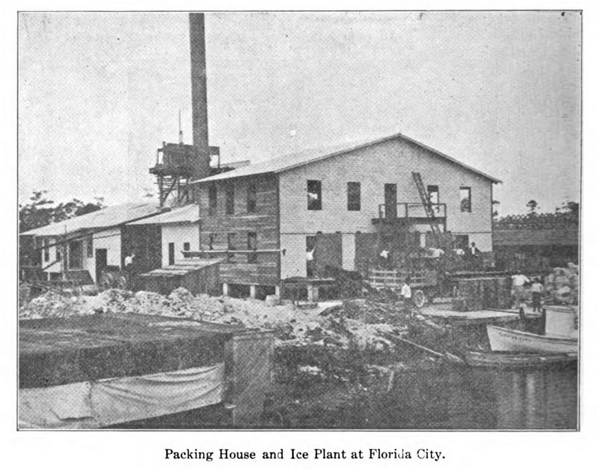
Owning a store, selling real estate and being involved in the local political scene wasn’t enough for Free, though. In 1919, the Homestead Growers’ Exchange, a cooperative agricultural marketing business, was organized and Free was elected as the chairman of the Board of Directors.31 He had cropped since he had arrived in Homestead but by 1920, he owned 250 acres in Highland, which was where the Mexican-American housing complex is located southwest of Florida City, just west of the prison. A “good-sized packing house with accommodations for 23 packers … built of lumber cut on the grounds…” was built to handle the crops raised in the surrounding area.32 Free also had a commissary where his employees could purchase “necessary provisions” and a “good boarding house for white help at not over $8.00 per week”33 on the property. During the 1920-1921 farming season, Free leased 40 acres of his property to six Hindus, who “were real workers,” harvesting 400 crates per acre, “all through hard work.”34

In 1921, Joe Burton and J. U. Free dissolved their partnership and Burton moved into the north half of the ground floor of the new Horne Building on Krome Avenue, where he opened Burton’s Department Store.35 Early in 1922, Free reorganized his company and capitalized it at $30,000.36 He invited Emory H. Brandenburg, Sr., who came down from Griffing, Georgia, to be the manager of his business.37 In 1923, Emory married Nina Scott, the daughter of Free’s wife’s sister, Jipsie Mae Carmichael.

A new concrete building was erected on the north side of the wooden building, adjacent to the new Homestead Bakery building,38 which was erected before 1921 by J. E. McDonald, another developer in early Homestead.39 In the photograph below, taken in 1921, the building at the left side of the photograph is the hotel. Free erected his new building where the Meat Market, which was owned by Arlie and John Tucker, of Adel, Georgia, is shown.

Fuchs Bakery Building

Courtesy of the Florida Historical Society

In later years, the former Free Building was the home of Churchman’s Furniture. The building, built of poured concrete on the first floor and tile block construction on the second,40 was demolished in 1993 in the demolition derby after Hurricane Andrew.

Churchman s Furniture

Photograph courtesy of Jack Levy

As early as 1914, Free had incorporated the phrase “The Hustlers” into his store name and that is how he continued to advertise his business in his new building.

The Hustlers

The grand opening of the new store took place on July 20, 1923 with a supper and dance.41

Free had sold real estate since shortly after he arrived in 1907. Real estate sales had been growing steadily since at least as early as 1912, when the Bank of Homestead was established to provide capital for real estate speculators. By 1925, sales had accelerated to the point where Free sold over $50,000 ($744,000 in 2020) worth of real estate in just 10 days in early March.42 By the summer of that year, Free had sold his house on the Dixie Highway to a syndicate who put it on the market as Desoto Heights,43 got on board with a proposal to create Redland County out of the southern portion of Dade County44 and was elected president of the Homestead Bond & Mortgage Co., organized on April 3, 1925 and capitalized at $250,000.45 Edward Stiling and W. D. Horne were added as directors a week later.46 In mid-April, with the real estate market booming, the Homestead Realty Board was organized. Free was a director and one of 31 members.47

In February of 1925, Free purchased the hardware department of the Homestead Mercantile Co.48 and then sold it in late 1926 to his half-brother, Joe Burton. Burton had previously gained control of the rest of the company and changed its name to Burton’s Department Store.
Burton s Dept Store

Burton’s Department Store in the Homestead Mercantile Co. Building
Courtesy of the Florida Pioneer Museum

The 1926 hurricane, which made landfall at Cutler, due east of Perrine on September 18, is remembered in history books as the hurricane that destroyed Miami. It is not well-known that the center of the hurricane passed over Perrine and thus severely damaged the southern portion of Dade County as well. Free, along with many other businessmen and farmers, suffered large losses from which many did not recover. Free was one of them: he filed for voluntary bankruptcy on October 12, 192749 and the assets of his business were liquidated by March of 1928.50 Free still had considerable assets, though, enabling his wife and children to take a two-month motor trip to the northern states in the late spring of 192851 and Free to take a separate vacation later that summer to New England, Nova Scotia and Newfoundland.52

A few months after he returned, Free underwent a “serious operation” at the Post Graduate Hospital.53 The operation, which was performed to discover the cause of the severe pain which he had been experiencing, revealed an advanced stage of liver cancer, which resulted in his death on November 11. His funeral, at the Methodist Episcopal Church, South, was attended by hundreds of mourners and he was buried at the Palms Cemetery with full military honors.54 Unlike other prominent men who died in the Homestead area in the 1920s, Free’s funeral was not attended by the Ku Klux Klan.

The KKK was very active in the Homestead area in the 1920s. 200 members attended the funeral of Charles D. Bryant, the Homestead Town Marshal murdered by William “Grey Eye” Simmons on June 15, 1923.55 Scores of Klan members attended the funeral of Thomas A. Collins, a businessman in Modello, who was killed in an auto/train collision on November 20, 1923.56 and dozens lined the path to the grave of Lindley Hoffman Livingston, who died on May 4, 1924. Lindley was the brother of Anthony R. Livingston, a prominent civil engineer in Homestead. Members from all over Dade County also attended the funeral of George W. Moody when he died on December 23, 1927. Even though Free worked in close association with Lawrence W. Taylor, the secretary of the Homestead chapter of the Ku Klux Klan,57 no documentary evidence has been discovered that stated or hinted at Free’s membership in the Klan.

The story of John U. Free, who came here in 1907 and died in 1928, is all too common in the history of this area. A prominent businessman in life, he was largely forgotten within 10 years of his death. The census of 1930 showed 2,905 people living in the Homestead precinct. By 1935, that number had increased to 3,901 and in 1940, to 4,063. The new influx of people and the unknown number of people who left the area in that 10 year period is the reason for the historical amnesia that obscures the past in South Dade.

Free’s son Wilbur settled in Oregon, married and raised a family, few of whom know much about their grandfather. His daughter Annie Vivian moved to Miami and married but apparently had no children. His son John U., III lived in Homestead all his life and had a family. Two of his daughters married into the Reinhart and Sizemore families but those families moved away from this area. A son, John U. Free, IV, also moved away. Today, other than the author, there are only a few people in South Dade who are familiar with the Free surname. This area has always had a very transient population which severely handicaps the ability of historians who are interested in writing about South Dade’s past. As a result, the few books which have been written about this area are filled with inaccuracies and unfortunately present a very restricted picture of the events that shaped the history of this area.
______________________________________________________________________
Posted in Homestead | Tagged Developer, Telephone Company | 11 Replies

John Ulric Free – Part I

Historic South Dade Posted on October 5, 2020 by JeffNovember 15, 2023

by Jeff Blakley

Jean Taylor, who published her book The Villages of South Dade in 1984, was the first person to write a comprehensive history of this area. She wrote mini-biographies of over 260 families who lived as far north as Larkins (now South Miami) and as far south as Flamingo. Taylor relied, for the most part, on interviews with the pioneers themselves or their children. She also copied, without attribution, newspaper articles about pioneering families. Because many pioneering families’ children still lived in the area, Taylor’s book is understandably biased towards those surnames. In the Homestead area, the families which received the most coverage were the Redd, Fuchs, Caves, Brooker, Horne, Sullivan and Campbell families. The family of John Ulric Free, a man easily as prominent as the aforementioned family names, did not receive nearly as much coverage. J. U. Free’s wife, Lulu, had died in 1967, his son Wilbur lived in Oregon and his daughter Annie Vivian lived in Miami. John Ulric Free III still lived in Homestead, but there is no record of Taylor interviewing him. Writing about history is a challenge and Taylor did the best job she knew how to do. Her book, if read closely, demonstrates the difficult task that all historians face. In this article, I am going to attempt to provide a more complete account of J. U. Free and his family connections to this area.

John Ulric Free, Sr. was born in 1833 in Switzerland but when he came to this country is unknown. He first appeared in the 1860 census of Roane County, Tennessee, where he was enumerated as John M. Free, living in the household of Bennett K. Cunningham, a physician. He was born in Switzerland and was a harness-maker. In the 1870 census, he was enumerated as living with the family of Abraham C. North, a physician, in Senoia, Coweta County, Georgia. Again, he was a harness-maker. In the plantation economy, which used large numbers of draft animals, men who made harnesses were important artisans. While we do not know, it is likely that Free was an independent businessman who supplied harnesses and related products to nearby plantations. Senoia is about 25 miles south southwest of Atlanta. Abraham North owned real estate worth $1,500 and had a personal estate of $500. Men with the surname of North owned 98 slaves in Coweta County in 1860.14 The ownership of slaves is noted because that is an indicator of the social status of a family. Even though Free owned no slaves, he participated in the plantation economy as a businessman, not as a laborer. He lived in households whose heads were members of the middle-class or higher. By the mid-1870s, J. U. Free had accumulated $2,000 in real estate.15 On December 16, 1879, at the age of 46, he married Emma Adeline Allen (1849 – 1917), who was born in Meriwether County, Georgia, the county adjoining Coweta to the south. Her father, Josiah, married Sarah Ann Atkinson in neighboring Pike County in 1826. Meriwether County was formed in 1827 from Troup County, which was separated from Pike County by the Flint River. By 1850, he was a prosperous farmer who owned 18 slaves24 but by 1860, that number had declined to 10.27 Still, he was well-to-do – he had real estate worth $2,000 and a personal estate worth $14,800.58 It is significant that in both the 1860 and 1870 censuses, Free was living in the household of physician and that his future wife was the daughter of a slave-holder.

John Ulric Free, Jr.was born in Senoia, Coweta County, Georgia on March 6, 1881.59 His brother, Wilbur Allen, was born on October 28, 1882. His father, John, Sr., died of unknown causes on June 22, 1884 at the age of 51, leaving two children and his wife, pregnant with their third child, Annie, who was born on September 5, 1884.

After her husband’s death, Emma married Charles J. Burton on December 26, 1888. Charles, like Emma, was from Meriwether County. His father, James N. Burton, was born there in 1835 and it is likely that the Burton and Allen families were friends. By her second marriage, she gave birth to Joseph Lee Burton on October 25, 1889 and Dewitt Burton on May 20, 1893. In the 1900 census of Atlanta, Charles J. and Emma Burton lived at 121 Ira Street with their children, Joseph Lee, Dewitt and Annie. Charles’ occupation was a “meat dealer.”

John enlisted in Company D of the 1st Georgia Infantry60 on May 10, 1898 and on December 12 enlisted in the field battery of the 2nd U. S. Artillery.61 On June 29, 1900, he was enumerated, with 58 others, at the Columbia Barracks, which was near Havana, Cuba. He was a private in the U.S. Army Hospital Corps. His address in the United States was 121 Ira Street, Atlanta,62 where his mother and step-father lived. He was discharged from the Army at Camp Wallace, in Manila, Philippine Islands, on December 12, 1901 and then served as a pharmacist in the U. S. Civil Service in the Philippines until 1903.63 64 While he may have served as a pharmacist, it was likely that was while he was in the Army, not when, even if, he worked for the Civil Service. A column by C. C. Clinton, which appeared in the Miami Herald in 1921, stated that Free had participated in the Boxer Rebellion in China and “was in the transport service on a large vessel which supplied meat for the army, navy and civilian population of Manila and the islands, which was brought regularly from Sidney, Australia and New Zealand ports.”65

Hospital Corps Columbia Barracks Sept 1900
Detachment Hospital Corps, Columbia Barracks, Cuba, September, 190066

J. U. Free is not pictured in the above photograph but a number of those enumerated in the census taken on June 29, 1900 are.67

Returning to the United States, John courted and won the hand of Lulu Carmichael, the daughter of Patrick and Mary Ann Washington Speer Carmichael. She was born in Senoia on February 23, 1883. According to the 1860 U. S. slave schedule, 9 men with the surname Carmichael owned a total of 53 slaves in Coweta County.68 This was not a large number – there were other men (and women) in Coweta County who owned far more. But the Carmichaels, like the Moodys in Appling County, were not poor. She and J. U. Free were married on November 2, 1904 at her parents’ home at Fender,69 about 10 miles south of Tifton, in what would become Tift County, created on August 17, 1905 from portions of Berrien, Irwin and Worth Counties.

After their marriage, John and his wife departed for Blakely, Georgia, where he was “engaged in the mercantile business.”70 The question will probably never be answered, but what brought J. U. Free to Early County? A possible answer may lie in the fact that John F. and Lewis Manly Free, both farmers, born in about 1834 and 1838, lived there. They were brothers – the sons of George and Nancy Free of Edgefield County, South Carolina and they may have been related to J. U. Free, Sr., born in 1833 in Switzerland.

John and Lulu’s first child, Vivian Annie, was born in Kestler, Georgia (the name was changed to Damascus in 1914) on August 19, 1905. Despite what the Savannah Morning News had reported, John instead went to Kestler, where he was a prescription clerk in a drug store.71 John and Lulu did not stay in Kestler long, moving to St. George sometime in 1906, where, for a short time, he owned a grocery store. St. George had been founded in 1905 by Philander H. Fitzgerald, a newspaper editor from Indianapolis, who had founded the town of Fitzgerald, Georgia in 1895 as a retirement community for Union and Confederate soldiers. Like Fitzgerald and Detroit, Florida, it was a planned community and was promoted heavily. Unlike Fitzgerald and Detroit, though, St. George never got off the ground and on November 4, 1907, one-third of the town was sold at auction.

By then, J. U. Free had moved on. He moved to West Palm Beach, where he was probably hired by the F.E.C. Railway.72 While his obituary says he was a bridge foreman in West Palm Beach, it is more likely that he held that job on the Key West Extension, where he, his wife and daughter were enumerated in 1910.73 Homestead was not that accommodating to women and children in 1907, so it is likely that Free left his family in West Palm Beach, possibly with relatives of his wife, while he built a house for them on his homestead and worked on the railroad. He paid $14 to file a homestead claim on 160 acres on November 7, 1907 and proved it up after 31 months, on June 13, 1910, due to his service during the Spanish-American War.74 There was a provision in the Homestead Act of 1862 which granted a veteran the time he served in the military towards the five year time requirement for proving up a homestead claim. The Homestead Act was amended many times over the years after its passage, each time making it easier for speculators to reap profits from land originally intended to be permanent farms for settlers.75 The land he claimed had previously been claimed by Lela Smith, the principal of the Cocoanut Grove school, in 1903; Nellie T. Budge, the sister of Frank T. Budge, a well-known grocer in early Miami, in 1904; and finally, by Bernard Smith in January of 1907. All of their claims were cancelled by the land office for failure to comply with the legal requirements after claiming a homestead. Eighty acres of Free’s homestead extended from Campbell Drive on the south to NE 11th St. on the north on both sides of theoretical McMinn, which does not go south of NE 11th St. The balance of his property ran from Campbell up to King’s Highway and went east to what is now Tennessee Road. The F.E.C. Railway ran through the middle of his property, which made it quite valuable. Most of J.U. Free’s property is now taken up by commercial parcels on both sides of U.S. 1. north of NE 8th St.

J U Free s original plat

J.U. Free’s homestead 76

Free must have made many trips back and forth between his job on the railroad in the Keys and his homestead. He finished building a house in early 1908 but it was likely not much more than what was required to satisfy the homesteading requirements, despite the account given in The Villages of South Dade.77 He and his family were in Bahia Honda when a major hurricane swept over the area on October 12, 1909.78 They survived the storm surge, which swept away all of their possessions, for on April 29, 1910, John, his wife and his daughter were enumerated on Long Key, where he was a foreman for the F.E.C. Railway.79 In 1913, Free “sold his old home” and moved into a new residence on Center St.80 When Homestead started numbering streets, Center St. became S.W. 1st St. The portion of Center St. where the Free house was located was vacated by the City of Homestead to build Homestead Station. Free later built a very nice home on lot 18 of his homestead, which is the triangle on the west side of Old Dixie south of King’s Highway, but that house was not completed until 1916.81 82

On November 9, 1910, their son, John Ulric Free, III, was born in Homestead. John’s brother, Wilbur Allen, was born on March 23, 1915.

J U Free  Wanda Strickland

Courtesy of Wanda Strickland

Left to right: John Ulric Free III, Lulu Belle Carmichael Free, John Ulric Free, Jr., Wilbur Allen Free sitting on his mother’s lap and Annie Vivian Free. Photo taken in 1915.

John and Lulu also had a fourth child, Emdrath Rupert, born on May 10, 1917. He was named after his grandfather83 but he was killed when he darted into the path of an automobile in front of his home on January 9, 1919, 4 months before his 2nd birthday.84 An interesting sidelight to the names of John Ulric Free, Jr.’s children: they were named after his father, John Ulric, his brother, Wilbur Allen (1882 – 1900) and his sister Annie (1884-1966).

Annie Vivian graduated from the last class at the Homestead School on June 1, 1922,85 before Homestead High School was opened in 1923. She went on to graduate from the Florida State College for Women, now Florida State University, and become a teacher at Highland Park school in Miami, where her principal was Lorraine Garfunkel, the daughter of Morris Garfunkel, who opened the Model Furniture Company in Detroit in 1914. She married James O. Murphy, a barber, in 1931 and lived in Miami until her death in 1999.

John Ulric Free, III married Mittie Rose Chambers, the daughter of William L. Chambers and Martha Louise McLendon, both old Princeton families, on July 30, 1933. Together, they owned and operated the Rose Motel in Naranja for a number of years. It was built in 1951 and is one of the few remaining motels from that era. Like a similar motel in Goulds, it has individual cottages comprising the facility. The former motel is currently used as an elder care institution.

Rose Motel

Courtesy of the Florida Pioneer Musuem

John lived in the Homestead area his entire life but little, if anything, has been written about him. He died in 1998 and is buried, with his wife, at Palms Memorial Cemetery.

Wilbur Allen played on the Homestead High School football team, the Whippets, in 1930. He was a fullback and other members of the team were Douglas Tower, Early Dendy, Ansel Barrow, Edwin Brooker, and Robert Rohrer. Garland Wynn was the quarterback.86 He enrolled at the University of Idaho in 1937, leaving after three years to enlist in the Marines in September of 1940. He trained as a pilot in Miami, receiving his wings on August 16, 1941. After spending 18 months in Corpus Christi, Texas as a flight instructor, he left for the Pacific Theatre in late 1943. Captain Free downed a Japanese Zero over Empress Augusta Bay in Bougainville in December87 and in March of 1944, he and his “Hellhound” fighter squadron were credited with downing an additional 62 Japanese planes. Free was promoted to Major and was credited with downing 3.5 planes.

On June 4, 1944, Wilbur married Juanita Ruth Anderson, of Moscow, Idaho, in Portland, Oregon. She was a graduate of the University of Idaho and taught music in the Potlach, Idaho high school.88 During the Korean War, Lt. Col. Free served as operations manager for the 1st Marine Air Wing’s service group.89 Wilbur Allen Free lived in Portland and was buried in the Willamette National Cemetery there in November of 2008.

In Part II of this article, I will write about Free’s businesses and real estate development projects.

______________________________________________________________________
Posted in Homestead | Tagged Developer, Telephone Company | 17 Replies

Edward Stiling

Historic South Dade Posted on September 6, 2020 by JeffMarch 6, 2023

By Jeff Blakley

It is often noted that history is told by the victors. Those who don’t tell their stories are forgotten but those who do assume out-sized importance in the historical record. Such is the case with Edward Stiling, who, in the published histories of Detroit (now known as Florida City), overshadows many others, like Lafe Ishmael, the Shields brothers, Elbert H. Ring, A. C. Graw and James Powers, who also contributed greatly to the establishment of the town.

Edward Stiling

Courtesy of the Florida Pioneer Museum

Edward’s parents were Edward Chambers Stiling and Sarah Ackland Ellis. Edward C. Stiling, Edward’s father, was born on July 26, 1828 in Broadhembury, Devon, England. In 1851, Edward and his wife, Sarah Ackland Ellis, lived on a 52 acre farm in Broadhembury. By 1858, they had three children: Grace E., born ca. 1854; Georgina, born ca. 1856 and William, born in September of 1858. In August of 1859, the family emigrated to Canada, where they were enumerated in the 1861 census as living in Normanby, Ontario. Edward was born there on October 18, 1860. Edward’s father found work as a butcher there but didn’t stay in Normandy long, moving to Mt. Forest, Ontario, a small town 230 miles northeast of Ann Arbor, Michigan. In December of 1862, the family moved again, this time to Ann Arbor, where Edward’s father was a baker.63 If he owned his own shop, no evidence has surfaced of that. Edward’s father died in obscurity on October 25, 1888 in Detroit and his mother, Sarah, died on May 17, 1900, also in Detroit. Nothing further is known about either of Edward’s parents.

Edward attended the public schools in Ann Arbor until 1876, when he was 16. The family then moved to Detroit. A short biography of Edward, published in 1914 in the Homestead Enterprise, stated that he entered “a prominent business college” in Detroit, where he took “a thorough course in bookkeeping, commercial law and kindred subjects,” graduating after three years in 1879.71 That school was likely the Bryant & Stratton College, which was located at the corner of E. Larned St. and Woodward Avenue in downtown Detroit. In October of 1881, Edward went to Texas and then moved to Sanford, Florida in 1882,72 where he accepted a position as bookkeeper for the firm of Tuxbury & Fernald.73

Sanford, a planned community, was founded by Henry S. Sanford, a wealthy diplomat from Woodbury, Connecticut in 1870, when he purchased over 18,000 acres from Joseph Finegan, who had served as a brigadier general for the Confederacy. The town was incorporated in 1877 with a population of 10076 and by 1880, the South Florida Railroad had connected Sanford with Tampa.79 At about the same time, Charles H. Tuxbury, a wealthy lumber dealer from Saco, Maine and John C. Fernald, a retail grocer in Saco, established the firm of Tuxbury & Fernald, a hardware store, in Sanford.

Tuxbury  Fernald

Advertisement for Tuxbury & Fernald90

On June 18, 1885, Edward Stiling, 24, and George H. Fernald, John’s son, 24, were enumerated in the household of C. H. Tuxbury in Sanford.91 Edward was a “bookkeeper” and George was a “merchant,” as was Charles.

Like most business districts of that era in Florida, the buildings in downtown Sanford were constructed of wood. On September 27, 1887, a fire that started in a bakery destroyed much of the downtown area.92 After the fire, there was no further mention of Tuxbury & Fernald in the newspapers so it is likely that the building burned down and the owners did not rebuild.

Alfred G. Prentiss, another retail grocer in Saco and a friend of the Fernald family, spent his winters in Sanford and brought along his family, including his daughter Emily. Edward and Emily fell in love and were married in Saco, Maine on November 15, 1887. They returned to Florida, settling in Cocoa, where Edward had partnered with Alfred A. Taylor to buy out George H. Fernald, who had opened a branch office of Tuxbury & Fernald on Delannoy Avenue. They renamed the business Stiling & Taylor. In 1889, Emily became pregnant and went back to her parents’ home, at 27 Thornton Ave. in Saco, where she gave birth to her only child, Octavia Rosaleen, on November 5, 1889.93

Stiling  Taylor Ad

Advertisement for Stiling & Taylor in Cocoa94
Courtesy of Roy Laughlin, Historian, Cocoa, Florida

On September 2, 1890, much of downtown Cocoa, built out of wood like Sanford, was destroyed in a fire.95 Shortly after the fire, which heavily damaged or destroyed his properties, Edward “purchased the Julius King store lot” and rebuilt his “business house and residence on a larger scale than at first contemplated.”96

Stiling Store Cocoa

Edward Stiling’s Hardware Store in Cocoa
Courtesy of The Florida Historical Society

Stiling s Second House

Edward Stiling’s New House
Courtesy of The Florida Historical Society

Edward’s business, which included supplying shipping crates to citrus growers, likely grew slowly, as the Jacksonville, St. Augustine and Indian River Railway, owned by Henry Flagler, did not reach Cocoa until 1893. With regular freight service to the rest of the country, Stiling’s business grew substantially. A little over a year later, though, the Great Freeze of 1894-1895 crippled the citrus industry and the economic impact was severe. Stiling’s business was hit hard. Then, on September 20, 1897, a hurricane struck Cocoa and blew the roof off Stiling’s “new brick warehouse.”97 After suffering three substantial losses in seven years, Stiling left Cocoa and moved to East McKeesport, Pennsylvania. There, he got into the real estate business and, in November of 1898, placed an advertisement in the Pittsburgh Daily Post, offering his house in Cocoa for sale.

McKeesport PA

Stiling Lists His House For Sale98

In 1900, he was briefly investigated by a Grand Jury and fended off a lawsuit filed by Mrs. Margie Gaertner.99 Stiling was active in East McKeesport until at least the spring of 1901, when the Keystone State Building and Loan Association filed a legal action against him over a mortgage.100 Stiling was listed as a broker and retailer on the Mercantile Appraiser’s List for East McKeesport at this time.101 He was unsuccessful in selling his house in Cocoa and in December of 1902, he leased it to Mr. and Mrs. Steele, who were from Canada, for the winter season.102

Once his legal troubles had been resolved in East McKeesport, Stiling went back to Detroit, where he was listed in the 1903 Detroit City directory as living at 168 Lincoln Ave.

168 Lincoln Detroit MI

168 Lincoln in 2022, courtesy of Eric Jones, the current owner

He was hired by the Boydell Bros. White Lead and Paint Co. as a traveling salesman. The Boydell firm was one of the largest paint manufacturers in the Midwest at the time, occupying an eight-story building in downtown Detroit. It is not known how many places Edward went on his sales calls but one place he did go to was to Miami, where he registered at the Biscayne hotel on November 21, 1904.103 It was his first visit and he was “so favorably impressed” that he may have made some real estate investments.104

Since Stiling had spent nearly 20 years in Florida and because he had also been a real estate salesman, he certainly paid attention to investment opportunities. The Everglade Land Sales Co., which was a national firm, placed an advertisement in the Detroit Free Press on December 19, 1909 that read:

WANTED – High class salesmen: general agent for every county and local representative for every town; capable of earning $5,000 to $15,000 per year to sell Florida Everglade land now being drained by the state of Florida under U. S. government supervision; world’s largest reclamation project; millions of dollars being invested; 9,200 farms already sold this year; most fertile and productive soil in America; worth over $6 per ton as fertilizer; produces $300 to $450 per acre yearly; price only $30 per acre, sold on terms of $1 down and $1 per acre per month; only tropical section of the U.S. mainland; liberal proposition to right men; write for further particulars; only reliable hustlers need apply. Address EVERGLADE LAND SALES CO., 1219 Majestic Bldg., Chicago.

It is uncertain when the Everglade Land Sales Co. was organized, but Henry G. Ralston, who was born in Chicago in 1884, became associated with the company in July of 1909 and moved to Miami in October. He was a first vice-president and a member of the Board of Directors of the company and later was a principal in the firm of Ralston Brothers, Inc., a prominent Miami real estate development company.105 His father, Robert W. Ralston, platted the Pinehurst Addition to Homestead in November of 1912. That property, the NW 1/4 of the SE 1/4 of 13-57-38, was claimed by four men, one of whom was George B. Romfh, Jr., son of a Miami banker, before being proved up by Leonard S. Mowry in September of 1911.

The Everglade Land Sales Co. advertised in newspapers all over the Eastern United States and their advertisements in Detroit caught the eye of Edward Stiling. Early in 1910, Stiling, two friends from Detroit, John Kay and Dr. T. W. Shields, and Theo Ivens of Sioux City, Iowa, came to Miami to investigate the claims of the company. They left, suitably impressed, and the Miami Metropolis stated that they would be back in the fall to locate.106 Stiling must have connected with the Tatum Bros. Real Estate & Development Co. while he was in Miami because well before the fall, on August 6, Stiling sent a telegram to his friend, Dr. T. W. Shields, telling him that the name of the town the Tatum Bros. were promoting was Detroit. He wrote Shields that he had “another choice section” and he hoped to “sell it all in a month.”107 On August 31, 1910, Stiling purchased six 10-acre tracts and on September 1, he purchased seven more from the Tatums. His total outlay for these purchases was $4,680, equivalent to $130,000 in 2019 dollars.108

On August 31, the Detroit Times printed a note that said that “[a] number of residents of the northwestern part of this city, near Grand River and Hudson aves., have become interested in the fertile reclaimed everglades of Florida and have invested in from 10 to 50 acres each in a tract of land that has just been opened up near Miami and which they propose to make into a town, christening it Detroit.” Edward Stiling, of 168 Lincoln Avenue, was “one of those most deeply interested in the new city but others, “including Dr. T. W. Shields, A. R. Cunningham, John Duncan, T. T. Pomeroy and John A. Kay” were also interested.109

Edward may have escorted the new arrivals to Detroit, Florida – he may be the man standing on the corner of the platform – as the Detroit Free Press reported on June 4, 1911 that Stiling had “returned from a seven months’ sojourn in Florida.”110

First Detroit FamiliesThe first families arrive in Detroit on October 29, 1910
Courtesy of the Florida Pioneer Museum

From June 23 until October 23, 1911, he placed an advertisement almost every week in the Detroit Free Press promoting Detroit for the Miami Land & Development Co. How many buyers he was responsible for is unknown but he did not establish a residence in Dade County until at least 1911. He had a real estate office in Detroit, at 692 Trumbull, where he solicited buyers and he traveled back and forth between the two Detroits for several years. In April of 1912, he was listed as a vestryman for the Trinity Episcopal Church in Detroit, Michigan111 and in January of 1914, there was a note in the Miami Herald that he had returned to Detroit, Florida after an absence of six months.112

Stiling went on to play an important role in the establishment of Florida City. Appointed briefly as Detroit’s first postmaster on December 13, 1910, he served in that capacity until June 10, 1911, when Marion L. Williams took over. This short stint as postmaster ended with Stiling’s departure for Detroit, Michigan in early June.113 He was appointed to serve the balance of the term of Florida City’s first mayor, Dr. Benjamin F. Forrest, in late 1916 and then was elected for a full term as Mayor in 1918. He served on the Town Council twice and was elected Mayor again in 1938. Active in civic affairs in both Florida City and Homestead, he was also a leading real estate salesman whose office was on the southwest corner of S.W. 3rd Avenue and Palm Drive. As a representative of the Miami Land & Development Co., he promoted Florida City relentlessly and was richly rewarded as a result. When he died in 1945, the pallbearers included Henry Brooker, Jr. and Clarence J. Parman, a well-known architect in Homestead and a business partner of Stiling’s daughter’s husband, Lee Lehman. Stiling and his wife are buried in the mausoleum at Miami’s Woodlawn Cemetery.
______________________________________________________________________
Posted in Detroit, Florida City | Tagged Mayor, Miami Land and Development Co., Realtor | 18 Replies

Russell F. Tatum – Homestead’s 1st Mayor

Historic South Dade Posted on August 5, 2020 by JeffSeptember 8, 2022

By Jeff Blakley

The Town of Homestead was incorporated on January 27, 1913 and Russell “Russ” Fleming Tatum was elected as its first mayor. The published histories of this area offer little or no information about who he was, though. Tatum came to Miami in 1911 and was distantly related113 to the Tatum Brothers of Miami.114

George Tatum (1721-1801)

James P. Tatum (1755-1829)

Buckner (1802 -1895)

Aaron S. (1834-1915)

Judson H., Bethel B., Johnson Reed and Smiley Mosteller

Haley Tatum (1751-1819)

Hardy Coates Tatum (1793-1863)

Robert Haley (1818-1877)

Gaines Webster Marquis (1852-1930)

Russell Fleming (1878- 1958)

Russell’s father, Gaines W. M., and his mother, Louise Gray, were from Dade County, Georgia. They were married in Franklin County, Tennessee on September 4, 1873 and their first son, Robert H., was born on August 12, 1874 in Estill Springs. Russell’s birth followed on January 1, 1878. Shortly afterwards, the family moved back to Dade County, where they were enumerated in the 1880 census.

R F Tatum 3

Russell F. Tatum
Courtesy of Sharon Davies

The Tatums and the Grays were both prominent families in Dade County. Gaines’ father, Robert Haley, and Louise’s father, William, both served as representatives in the Georgia Assembly.115 Gaines, whose full name was Gaines Webster Marquis Tatum, served as a representative and senator in the Georgia Assembly for 16 years and also served as mayor of Trenton, the county seat of Dade County.116 Their children were also accomplished. Robert H., born in 1874, was a doctor; Russell was a lawyer and real estate agent, Thomas D., born in 1879, managed an ice plant in Gulfport, Mississippi;117 Webster N., born in 1884, represented Dade County in the Georgia legislature118 and Dana F. , born in 1891, was the head of the Inter-American Studies department at Rollins College in Winter Park, Florida.119

Russell Tatum grew up in Dade County and attended the public schools there. Little is known of his boyhood years but in May of 1898, at the age of 20, he enlisted in the 3rd Regiment of the Tennessee Volunteers. The regiment may have been sent to Tampa, Florida, the main staging ground for American troops fighting in the Spanish-American War.120 The war was short-lived: it began on April 21, 1898 and ended on August 13. It is not known if Russell participated in the war but if he did, his experiences there introduced him to Florida. If he left Georgia, it was only for a short time, because less than a year later, in May of 1899, he accepted a position at Thomas & Weatherford, a grocery store on Whiteside Street in South Chattanooga.121

In 1900, Tatum was enumerated in Dade County, Georgia, as being a law student.122 Dade County did not have any institutions of higher education, so it is not known where Russell studied law. However, it is likely that he attended school in Chattanooga, where Chattanooga University was founded in 1886.123 On May 20, 1900, the Chattanooga Daily Times noted that “Russ Tatum was home from Jasper this week.”124 Jasper is a suburb of Chattanooga and in July of that year, Russell became a charter member of a new Knights of Pythias lodge established there.125 The Knights of Pythias is a fraternal organization that was founded in Washington, D. C. in 1864. After graduating from law school, Russell decided to follow Horace Greeley’s famous advice to go west and went to Phoenix, Arizona, where he registered to vote in Ward 2 on June 11, 1904.126 Russ did not stay there long, as he returned to Dade County before November of 1907, when he and the Rev. Jesse G. Hunt, a well-known Baptist preacher from Summerville, in neighboring Chattooga County, purchased the Dade County Sentinel. Tatum became the editor of the newspaper,127 which had published its first issue on November 1, 1901.128

On July 16, 1908, Russell F. Tatum married Jessie Reed Cole, the daughter of Thomas Hart Benton Cole, a son of another prominent and old Dade County family.129 Jessie’s grandfather, William Isham Cole, married her grandmother, Lovina Clark, on December 3, 1835 in Warren County, Tennessee. They moved to Dade County, Georgia shortly after they were married and their descendants still live in the area.

In 1910, J.L. Foust and W. H. Payne, Jr., of Chattanooga, and R. F. Tatum were appointed general counsel for the Georgia division of the Alabama Great Southern Railway.130 The last mention of Russell Tatum in the Chattanooga Daily Times before he moved to Miami was on July 19, 1911, when he sold several hundred acres of land near Lookout Mountain at a court-ordered sale in Trenton.131

The Tatum family was well-known throughout northwest Georgia and Tatum’s business partner at the Dade County Sentinel, the Rev. Jesse S. Hunt, was no doubt a friend of Rev. Aaron S. Tatum, a fellow Baptist preacher. Rev. Tatum was the father of the Tatum Brothers of Miami, so it is very likely that Russell knew of their activities in Miami. On November 6, 1911, the Miami Metropolis reported that “Mr. and Mrs. R. F. Tatum and two children, of Trenton, N. J. (sic), are pleasant guests of the Biscayne and will be here during the winter season. Mr. Tatum is a distant relative of Tatum Brothers.”132 Russell had no doubt come to Miami at the invitation of his cousins, because he moved to Homestead in early March of 1912 and proceeded to sell lots in a tract of land there which the Tatum Brothers had purchased.133 This tract of land was Tatum’s Addition to Homestead, recorded in the records of Miami-Dade County on May 6, 1912 in book 1 on page 128.

Tatum s Addition to Homestead

Tatum’s Addition to Homestead

This plat explains how the names of the streets came to be: Jessie was Russell’s wife, while Lucy and Margaret were his daughters. Krome Avenue in that part of Homestead was known in 1912 as the “County Rock Road.” Margaret Street is now S.W. 6th Street and Jessie Street is now S.W. 1st Avenue. But Lucy Street is still named as it was in 1912, which must be a record for this area. In the first issue of Rev. J. A. Kahl’s South Florida Banner, on March 15, 1912, Tatum placed a large advertisement on page 6 advertising lots for sale in this new subdivision.

Late in 1912, Tatum and his wife platted the Ridgedale Addition to Homestead,134 located just north of Campbell Drive and east of Krome Avenue. On the original plat, N. E. 9th St. was named Campbell St. and Campbell St. was named McMinn St. The subdivision did not originally have the parkway in the middle of N.E. 9th Ct. – that was added in a re-plat (recorded in book 4, page 95) done in 1917. The name of the subdivision came from Ridgedale, Tennessee, a suburb of Chattanooga, where Jessie Cole Tatum’s sister, Mrs. J. B. Williams, lived.135

An advertisement that Tatum placed in the Miami Metropolis on March 19, 1912 offering land for sale in Homestead was the first of over 200 that he placed over the following year. On April 12, he offered 70 acres for sale in a “town soon to be incorporated.”136 Tatum’s office was on Railroad Avenue (now Flagler),137 adjacent to and on the north side of the Homestead Garage, which was located on parts of lots 2 and 3 of block 3 of the Town of Homestead.138 139 The location was ideal, as it was just south of the F. E. C. depot and across the street. Passengers getting off the train would see his office as soon as they left the depot. This photograph was taken in about 1916, after Russ and his brother Braddock S. had established the R. F. Tatum Realty Co. in August of 1914. Brad was a “well-known and successful real estate dealer of Chattanooga, Tenn. and was until recently connected with the Chattanooga Land and Development Co.” He arrived in Homestead in early October to work with his brother.140

Russell Tatum's Real Estate Office

Russell F. Tatum’s Real Estate Office
Courtesy of the Florida Pioneer Museum

After incorporation, Homestead used the Sistrunk Hall, which was located on the south side of Mowry, just west of the Bank of Homestead, as a meeting place. The building was used by churches to hold their services, the Chamber of Commerce, fraternal groups like the Masons and the Eastern Star and the local dramatic club, which staged plays there. Homestead’s first movie theater was also located in the building. Completed by Edward Sistrunk in early 1913, it burned to the ground on September 7, 1916.141

Tatum  1916

R. F. Tatum in his real estate office – 1916
Courtesy of the Historic Homestead Town Hall Museum

Before the hall burned, Tatum, as Mayor, moved the city clerk’s office to his building on Railroad Avenue.142 In this photograph, which was first published in Jean Taylor’s book, The Villages of South Dade, the identities of the men given in her caption are incorrect. The man in front is Russ Tatum, the man in the back is W. B. “Bunny” Caves and the woman is Mrs. Sarah E. Norton. The photograph belonged to W. B. Caves and the inscription on the back of the photo identified her as “Mrs. _______ Norton, an early Homestead subdivider, paying her taxes.” Mrs. Sarah E. Norton was another of the female land speculators in early Homestead who have not been investigated by historians. She was the wife of John F. Norton, the F.E.C. engineer who drove locomotive No. 201 into Key West on a test run the day before Henry Flagler arrived on January 22, 1912.143

Russell F. Tatum was elected as Homestead’s first mayor on January 27, 1913.144 In January of 1914, Dr. John B. Tower ran against him but was defeated. Tatum elected not to run for mayor again in January of 1915, instead spending his time on his growing real estate business. Frank Bartmes and J. U. Free ran for the vacancy and Bartmes won.145 Bartmes had purchased Sistrunk Hall in late December, 1914 and ran the movie theater there in a partnership with Edward Sistrunk. Shortly after being elected, Bartmes was involved in a motorcycle accident that resulted in the fracture of his C-4 and C-5 vertebrae, nearly crippling him.146 He had to step down as Mayor as a result. James D. Redd was appointed acting Mayor and in a special election held on November 2, he was opposed for the position by Fred Loomis, who won by a “bare plurality of 3.”147 In December, Tatum was persuaded to run for office again and he won, beating Fred Loomis 58-41 on January 11, 1916.148

During his first two terms, Tatum’s most notable actions were to push through Ordinance No. 15, which specified the requirements for privies149 and the veto of a franchise for the Homestead Light, Power and Ice Co., whose president was Edward C. Loveland. Tatum was in favor of municipal ownership of an electric plant,150 a stance that was unpopular with the business community. The franchise passed all three readings, beginning on December 7, 1914, was vetoed by Tatum on December 24, 1914 and unanimously approved by the Town Council on January 4, 1915. Those present and voting in favor were: J. U. Free, J. E. Cochrane, J. D. Redd and G. M. Budd.151 The franchise of the company, a lengthy document, was published on January 7, 1915 in the Homestead Enterprise on page 8. The approval of the franchise was unpopular with the residents of the town, however. A special election, held on August 25, 1915, resulted in the rejection of the franchise and the approval of municipal ownership of the proposed light plant. Municipal ownership became possible after the Florida Legislature amended the charter of the Town of Homestead in 1915 to allow for a larger bonding capacity.152 The vote was 34 in favor of municipal ownership and 5 opposed.153 Tatum was no longer Mayor but he no doubt campaigned for his position, which was upheld by the voters.

Tatum was elected to a two-year term in January of 1916, the term of office having been changed under the new charter for the Town of Homestead issued during the previous year.154 He started off his third term in office very aggressively, pushing for sidewalks, cleaning up rubbish in the town and asking for enforcement of the sanitary regulations that he had pushed through in his first term.155 In March, he got into a fight with the Council over property taxes, saying that the millage rate was too high and in May the sanitation ordinance he supported was rejected by the Town Council.156 Apparently tired of feuding with the Town Council, he ran for County Tax Assessor in the June primary but was defeated.157 If Tatum was not faring well in the political world, he was doing very well with his real estate business. Later in June, he purchased the M. L. Williams apartment building in Florida City and it was noted that he had owned 6 automobiles in 5 years.158 In August, he was one of the incorporators of the White Rock Quarry Co. (later the Naranja Rock & Sand Co.), owning 45 shares. The other share owners were Edward A. Graham, president, 70; William R. Burton, 45; Sidney E. Livingston, 45; and Henry R. Pridgen, 45.159 In November, Jessie, his wife, was among the group of women from the Homestead Women’s Club who assisted at the dedication of the new Royal Palm State Park, now part of Everglades National Park.160

In early April of 1917, Tatum helped E. H. Ballard and E. H. Holtman (sic), who were with the Curtiss Aviation school in Miami, select a site for a landing field in the East Glade.161 The site was cleared and the field built in time for E. H. Holterman to complete a 30 mile flight from Miami to Homestead on April 10, where he landed and then took off again for Miami. He was the first graduate of the Curtiss Aviation school in Miami and his successful flight entitled him to be a lieutenant in the aerial reserve of the army.162

In early July, 1917, Tatum moved to Miami,163 where he lived at 1728 Brickell Avenue and worked for his cousins, the Tatum Brothers.164 James D. Redd was once again appointed to be acting mayor, until Samuel A. King, the father of Neva King Cooper, was elected to fill the vacant position in October.165 The 1920 City of Miami Polk’s Directory lists the Tatums as living at 121 Bay Street, which no longer exists. It was close to where N.E. 13th Street and the I-395 exit ramp to Biscayne Boulevard now is. The data for the 1920 directory was gathered in 1919, so it is likely that this family photograph was taken at 121 Bay Street:

Tatum Family

Russell F. Tatum and his family in Miami
Courtesy of Sharon Davies

Pictured, left to right, are Lucy L., Tatum’s wife Jessie R., Margaret G., Jane, Russ with Mary Sue in his lap and Reed.

The Tatum family left Miami for Phoenix, Arizona, probably some time late in 1920. A notice of an undelivered telegram to R. F. Tatum appeared in the Arizona Republican on July 27, 1921 and in the fall of 1921, he was a member of the Parent-Teacher Association there. By 1927, he was the vice-president of the Ingleside Investment Co., a real estate brokerage and land development company.166 Tatum was active and well-known in the Phoenix area for the rest of his life. He was so well-known that a road, N. Tatum Boulevard, is named after him. It runs north from E. McDonald Drive near downtown Scottsdale up to N. Cave Creek Road, just north of the Caves Butte Recreation Area. However, Russ’ life in Phoenix is beyond the scope of this article. That story, if it is to be told, must be written by his grandchildren.
_____________________________________________________________________
Posted in Government, Homestead, Pioneers, Real Estate Speculation | Tagged Homestead | 6 Replies

Post navigation

← Older posts
Newer posts →

Subscribe to Articles

Subscribe

* indicates required

/* real people should not fill this in and expect good things – do not remove this or risk form bot signups */

Intuit Mailchimp

Quotes about History

History is herstory, too.Author Unknown
… (next quote)

Recent Posts

  • The Sawmills of South Dade – Chapter 3
  • The Sawmills of South Dade – Chapter 2
  • The Sawmills of South Dade – Chapter 1
  • Joe Frank Lofton
  • Andrew J. Poplin
  • John S. Frederick
  • The Cedars
  • William S. Burkhart
  • The Story of Franjo Road
  • Kendal Grove
  • Frederic M. Vermilye
  • The House That McNeill Built
  • The Story of Epmore Drive
  • William C. Norwood
  • William A. King

Archives

Categories

Links

African-American History
  • African-American
  • Dr. Marvin Dunn
  • Low Country Africana
Agriculture
  • Florida State Horticultural Society
  • USDA Search Engine
Genealogy
  • Dade County Marriages 1905-1911
  • Palm Beach County Marriages 1909-1913
Government Resources
  • Early Automobile Registrations
  • Florida Railroad Commission Reports
  • Florida State Library
  • Historical County Boundaries
  • IIF Minutes
  • USGS Topo Maps of S. Dade
Homesteading Records
  • BLM Homesteading Records
  • BLM Tract Books at Family Search
  • Miami-Dade Clerk of Courts
  • Township Range Locator
Magazines
  • Tequesta Magazine
  • The Tropic Magazine
Miscellaneous
  • History of Florida, 1923
  • Marion Post Wolcott WPA Photographs
  • Upper Keys Historical Society
South Dade Resources
  • Buncombe County, NC Deeds
  • Hopkins Plat Book – 1957
  • Polk’s Directory of Homestead – 1918
  • Sanborn Fire Map of Homestead – 1920
University Resources
  • Aerial Photographs of South Dade – 1938
  • Florida Historical Quarterly
  • PALMM
  • UF Digital Library
  • UM Special Collections
©2026 - Historic South Dade - Weaver Xtreme Theme
↑